
How to Choose an Electrician: UK 2026 Guide
By GuildSelect editorial.
Hiring an electrician is not like booking a cleaner: the work sits behind your walls, and most of us hire cold, from a search result or a recommendation. This guide sets out the five checks that matter, how to run each one, and the questions worth asking before anyone starts.
How to choose an electrician?
Five checks, in this order:
- Registration. With a government-approved electrical scheme: authorised to self-certify household work to the Building Regulations, and you can check it yourself in under a minute.
- Public reviews. Read their Google reviews — at volume, and recent — rather than trusting a directory badge.
- Trading history. Three years or more, under the same name.
- A written quote. Itemised, fixed where possible, with what is excluded said plainly.
- Insurance. Evidence they carry it, produced without fuss.
Each takes minutes. The rest of this guide shows what each check really tells you, and where it can mislead.
What are the different types of electricians in the UK?
The register used for the checks below lists electricians registered for full scope domestic work in England and Wales, alongside electrical inspectors registered to undertake electrical safety reports in homes (electricalcompetentperson.co.uk, read 20 October 2026). Operators run different scopes too: NICEIC offers an Approved Contractor Scheme and a separate Domestic Installer Scheme (NICEIC, read 20 October 2026). Many firms do only certain kinds of work — EV charge points, safety reports, fire alarm systems are specialisms on NICEIC's own list. A specialist is the right call when the job matches; a registered domestic electrician for everything else. What all of them owe you is the same — registration for the work they do at yours.
Qualifications and registration — what to actually check
Registration is the check everything else sits on. Electricians on the register are registered with a Competent Person Scheme Operator and authorised by government to self-certify that their work complies with Building Regulations; they meet entry requirements and are regularly assessed (the register). Electrical Safety First's summary is blunter: a registered electrician is regulated by government, works to the national safety standard BS 7671, is regularly assessed, and is insured (ESF, read 20 October 2026).
The register works both ways: search by postcode to find someone near you, or by company name to check someone you are already considering. In England and Wales the operators are NICEIC, NAPIT and BFC; in Scotland, NICEIC, NAPIT and SELECT (ESF).
What do you need to be a qualified electrician in the UK? That question — which the search results answer with training courses — is not one a homeowner has to answer. Ask the register instead. The industry's competence card, the ECS card, accredits qualifications and experience — you can ask to see one (ECS). In Scotland, cards run through the SJIB; SELECT advises asking for the registration card by name (SELECT). But the register check is the one with teeth: it is the route the government authorises for certifying household work, and it takes less time than finding the card.
What reviews can tell you (and what they can't)
A register entry is a snapshot — someone met requirements on the day they were assessed. It says nothing about whether they turn up when they said, quote fairly, or clear up after themselves. Reviews are where that shows — if you read them properly.
Public Google reviews have one advantage every other signal lacks: you can open them yourself. Look for volume (thirty reviews tell you more than five), recency (a run across the last year or two, not a burst in 2021), and how the firm answers when something goes wrong.
Directory badges are a different instrument. Which? Trusted Traders puts its traders through an assessment including credit, reference and background checks, with reviews verified by in-house moderators (Which?, read 20 October 2026). That is a real assessment — still a membership you cannot see inside. A score held within a directory is only as good as that directory's rules, and directories come and go: when Rated People went into liquidation in September 2026, its reviews did not move with the brand (what happened to Rated People).
Our Guild Standard is a published bar for the reputation part: a Google rating of at least 4.6 stars, at least 30 verified reviews, at least three years of trading.
Questions to ask an electrician
Six questions, asked before anything is agreed:
- Which scheme are you registered with — and can I check you on the register myself? A registered electrician can evidence their status easily; SELECT's advice is that unwillingness to show it is itself a warning sign (SELECT, read 20 October 2026).
- Is this price fixed or an estimate — and what is excluded? Making good, plastering and chasing out are the usual gaps; the electrician cost guide explains why two quotes rarely match on paper. The Which? advice against accepting an estimate over the telephone still holds (Which?, July 2018).
- Who certifies the work, and which certificate do I get? For notifiable work you should receive an Electrical Installation Certificate and a Building Regulations compliance certificate; keep them, as you may need them when selling (the register's guidance, read 20 October 2026).
- Are you insured — and can I see the certificate? Insurance is part of what registration involves (ESF), but asking costs nothing, and a current certificate is the direct answer.
- Can I see your Google reviews? Electrical Safety First's research found people often feel too embarrassed to ask whether someone is qualified (SELECT, citing ESF research). Ask anyway — it is the most ordinary question on the list.
- How long have you traded, and under this name? Trading history ties the register entry and the reviews to the firm standing in your hall.
SELECT's framing is the right order: ask early, before work is agreed.
Approved electrician vs electrician
At your front door, "approved" should mean one thing: on the register of a government-approved scheme, which you can check in a minute at electricalcompetentperson.co.uk. The trade also uses "Approved Electrician" as a JIB grading — the Joint Industry Board sets nationally agreed pay rates for employed electricians (Total Skills, reviewed April 2026) — which is why searches for the phrase return training pages and job adverts. Ignore the capital letters; check the register.
How quotes and pricing should work
Expect a fixed price for a defined job and a survey for a bigger one. Which?'s hiring guide is old (July 2018) but still describes the shape: an electrician will usually want to see the property to quote accurately, with routine jobs the exception; for extensive work such as a full rewire, an instalment before work begins is reasonable, under a written contract that says when further instalments fall due (Which?). The register's ordering-work advice agrees: a timetable in writing signed by both sides, changes confirmed in writing with a revised quote, payment terms agreed up front, materials possibly paid in advance on larger jobs — and avoid dealing in cash (the register).
On quote counts the sources disagree by one: TrustMark says obtain three before starting (TrustMark, read 20 October 2026); SELECT says at least two written quotes; NICEIC's spokesperson, quoted in Real Homes, suggests two or three, itemised, spelling out what is included (Real Homes, December 2018 — dated). "At least two, three is better" is the honest summary; comparing them like-for-like is how many quotes you should get.
Distrust a quote that lands far below the rest — that is where scope quietly shrinks. The full pattern is in builder red flags; most of it transfers. For what the work itself should cost, see how much an electrician costs — this page deliberately does not restate the numbers.
When the law requires a registered electrician
Electrical work carries a statutory line, so here it is plainly: since 2005, most fixed electrical installation work in homes in England and Wales must comply with the Building Regulations — Part P. Except for some minor tasks, the work must either be reported to local authority building control, or carried out by a registered electrician on a government-approved scheme (ESF's Part P guide, read 20 October 2026). In practice, the register's table shows what typically needs notifying: new circuits, consumer unit replacements and changes to circuits in bathrooms, shower rooms and similar rooms — in England and Wales alike; kitchen and outdoor circuit changes are notifiable in Wales, while England's list was narrowed in April 2013 (the register; ESF).
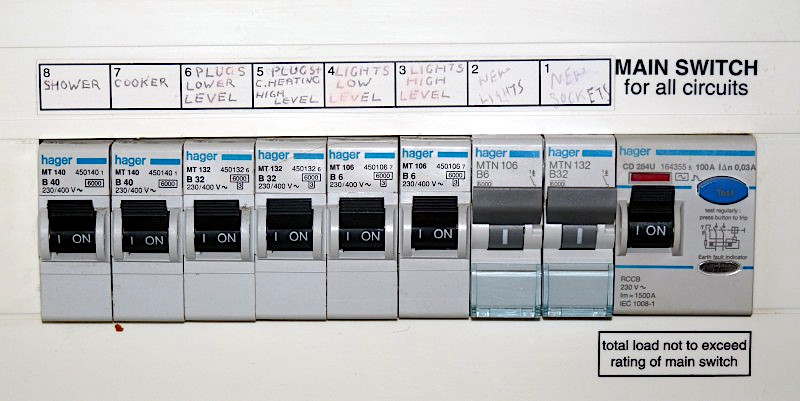
Use someone unregistered and the notification falls to you. By ESF's account, homeowners must be able to show their electrical work meets Part P, or they are committing a criminal offence, and a local authority can require non-compliant work to be removed or altered. A registered electrician handles the notification and the certificate, and a formal complaints procedure sits behind the scheme (ESF; the register). Scotland runs the Building Standards system instead (ESF).
This page gives no DIY electrical instructions, and no forum thread should be where you get them. The authoritative source is gov.uk's Approved Document P.
The five-minute check before you book
Run it in order: the register, free and checkable in a minute; Google reviews read properly — volume, recency, replies; trading history under the current name; a written quote with the exclusions stated; the insurance certificate. Registration comes first because it is the hardest to fake and the fastest to check. An electrician who is relaxed about all five usually has nothing to hide; one who bristles at the register question has told you what you needed to know before you paid anything. Our Guild Standard sets the bar for the reputation part: at least 4.6 stars on Google, at least 30 verified reviews, three years of trading.
Next step
If you would rather start from electricians who already meet that bar, browse vetted electricians. Working out what the job should cost is how much an electrician costs; the same logic for water and gas is in how to find a plumber you can trust; before you compare, read how many quotes you should get, and take the questions to ask a builder along — most work on an electrician too. More guides are in our guides section.