
7 Signs You Need a New Roof (UK Homeowner's Guide)
By GuildSelect editorial.
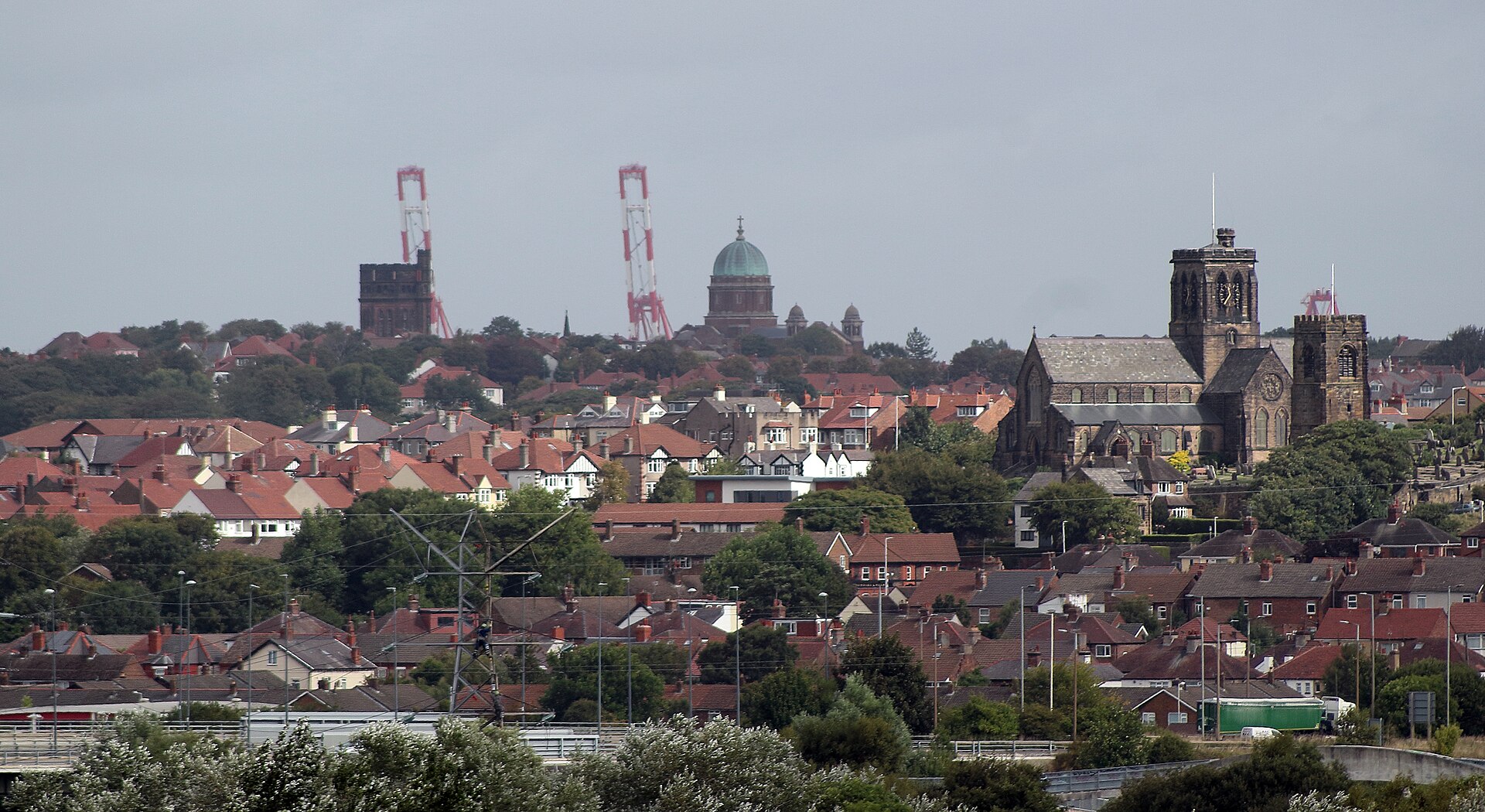
If water stains or damp patches appear inside, daylight shows in the loft, tiles are missing or slipped, the roofline sags, gutters collect grit, moss holds rainwater against the tiles, or a flat roof ponds and blisters, the roof needs attention — its age then decides between a repair and a replacement.
A sign is a prompt to look closer, not a verdict. Some turn out to be condensation, not a leak; some are one tile, not a failing roof. This guide shows what each sign tells you, what you can check without a ladder, and how to get the work quoted honestly.
What are the signs you need a new roof?
Seven warning signs you need a new roof, in the order a sensible check meets them:
- Water stains or damp patches on ceilings, or on the timbers and felt in the loft.
- Daylight in the loft where there should be none.
- Missing, slipped or cracked tiles or slates.
- A sagging or uneven roofline.
- Grit and debris collecting in the gutters.
- Moss holding rainwater against the tiles.
- A flat roof that ponds, blisters or feels spongy.
Two you can check from inside, four from the ground; the seventh may belong to a roofer.
Signs you can check from inside, without a ladder
Water stains or damp patches
Brown rings on a ceiling, damp at the top of a wall, water on the loft timbers — all point the same way: water is getting in above. People who see dripping from the felt or rafters assume a leak, but that is "most definitely, not always the case" (DIY Doctor, published July 2021, updated June 2022 — dated). The common false alarm is condensation: warm, moist air rises into the cold loft and turns back into water on the felt and rafters (DIY Doctor). Damp that shows after rain points at the roof; damp that appears in cold weather and eases when the house warms points at condensation — and if you are in any doubt, seek advice from a builder or roofer (DIY Doctor).
Waiting is what costs: a slow leak left through one winter can collapse plasterboard ceilings and rot structural timbers (FixMyRoof, 13 May 2026).
Daylight in the loft
Daylight should come through roof windows and vents only. Anywhere else — through the slope, at the edges, around the chimney — the light marks a gap, and the logic is simple: where light gets in, water has a path. Note where it shows and mention it to the roofer; gaps at the edges often trace back to slipped tiles or failed mortar.
Signs you can see from the ground
Missing, slipped or cracked tiles and slates
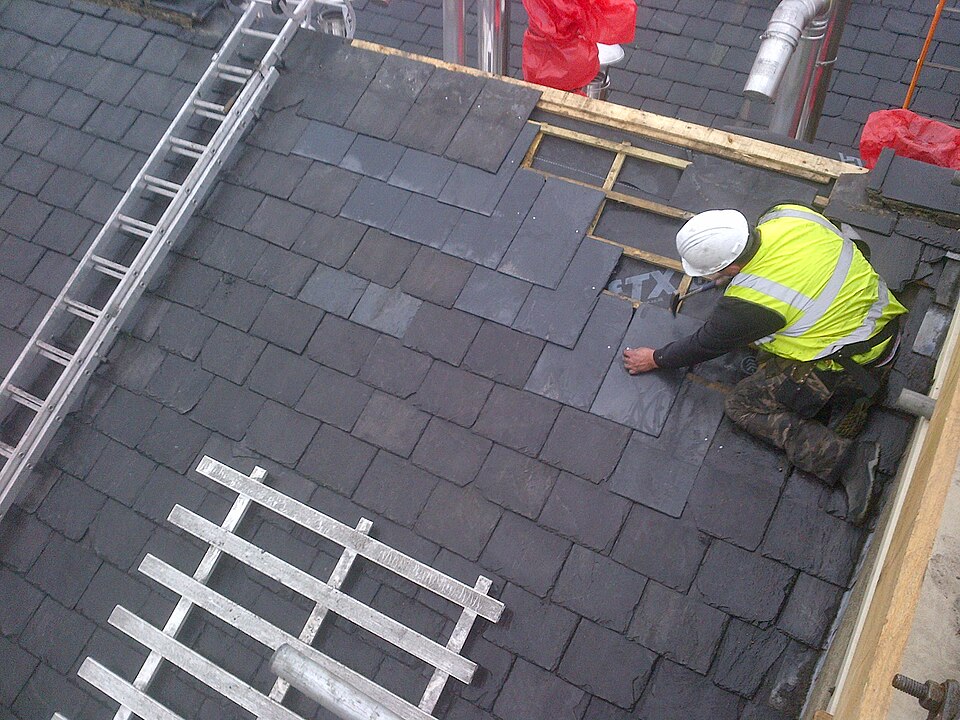
A gap in the tile pattern, a tile sitting out of line, or fragments after a storm are the outside signs nobody misses. One slipped slate is a repair. Widespread damage often points to failing fixings or battens deteriorating underneath — not a run of isolated incidents (FixMyRoof, 13 May 2026). Battens are the timber strips the tiles hook onto; when they go, tiles go with them.
A sagging or uneven roofline
Look at the roof against the sky: ridges and slopes should run straight. A dip or bow is structural — FixMyRoof's guidance is blunt: get a professional assessment, and in most cases replacement follows. This is the one warning sign that should not wait for a round of quotes.
Grit and debris in the gutters
Roof surfaces wear before they fail: concrete tiles erode, felt blisters and splits, built-up felt cracks and its blisters rupture (FixMyRoof's failure list). From the ground, that shedding shows up as grit collecting in the gutters and at the downpipe outlets. Keeping gutters and valleys clear matters anyway, so water does not back up and keep lower areas wet (HomeBuilding, published 24 March 2026).
Moss holding moisture against the tiles
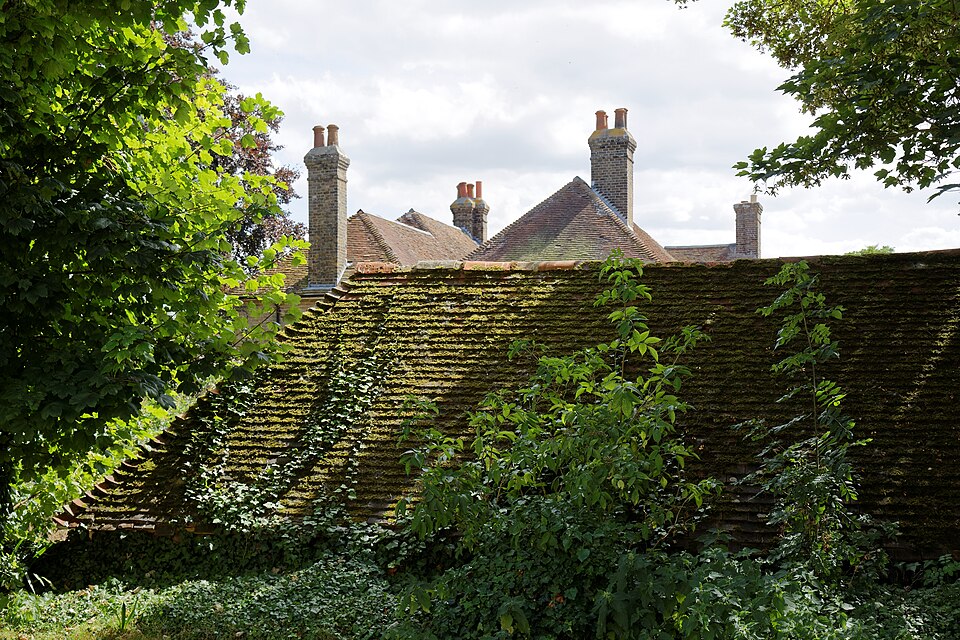
Moss is common where the slope faces away from the sun. HomeBuilding's expert compares it to a sponge: moss absorbs and holds rainwater against the tiles, which can weaken, crack, make porous or lift them (HomeBuilding, published 24 March 2026). Whether the moss is the problem or just a witness, FixMyRoof's test decides: moss that pulls away cleanly, leaving the tile surface intact, is cosmetic; tiles that crack or crumble when moss is removed, or roots beneath tile edges, mean the damage has gone past the surface. Pressure washing is usually the wrong tool: it can damage finishes and drive water where it should not go (HomeBuilding).
Flat roofs: ponding, blistering, a spongy feel
Flat roofs fail differently. Water that still sits on the surface days after rain — ponding — and blistering across the membrane are the visible signs; FixMyRoof's failure list for built-up felt reads "cracking, blister rupture, ponding". Its replacement threshold: widespread blistering and a spongy feel underfoot mean trapped moisture and a replacement that is overdue; so does cracking across the whole membrane rather than one isolated split (FixMyRoof, 13 May 2026). If you cannot see it from an upstairs window, this check belongs to the roofer.
How often should a flat roof be replaced? FixMyRoof's lifespans give built-up felt 10–15 years and torch-on felt 15–25 — a felt flat roof at or past those ages meets the criteria above.
Repair or replace? How to tell the difference
Whether a sign means a repair or a new roof comes down to three questions.
How widespread is it? Two competent repairs in the same spot with the same result mean the problem is wider than any patch can reach (FixMyRoof). Its roofer's rule of thumb: once damage covers more than about a quarter of the roof area, replacement becomes the sounder call.
How old is the roof, and what is it made of? FixMyRoof's lifespans, drawing on NHBC, NFRC, BRE and Lead Sheet Association guidance plus manufacturer data, run from natural slate at 80–150-plus years, through clay tiles at 50–100-plus and concrete tiles at 30–50, down to torch-on felt at 15–25 and built-up felt at 10–15 (FixMyRoof, 13 May 2026). All assume some maintenance — a neglected slate roof can fail at 40; a well-kept concrete-tile roof can reach 50. An 18-year-old felt flat roof and a 90-year-old slate roof can show the same stain and mean different verdicts.
What does the money say, honestly? Repair bills that repeat are the signal: repair costs on an ageing roof can surpass the cost of replacing it while the roof keeps getting worse (FixMyRoof). No figures here — roofing prices move too fast for a guide to quote (how much an electrician costs shows the format for another trade). For the 2026 numbers themselves, how much does a roofer cost sets out the published repair, day-rate and whole-roof figures, disagreements included. And do not simply go with the cheapest quote (TrustMark, read 22 October 2026).
There is a legal difference too. Small repairs — under 25 per cent of the building envelope (walls, floors, roof, windows) and under 50 per cent of the roof — normally need no building-control application; beyond those limits, structural alterations, a covering whose fire performance differs, or one more than 15 per cent heavier all need approval (the Planning Portal, read 22 October 2026). A full replacement needs approval "in most situations"; re-covering should include improving insulation, because a roof is a thermal element, and changing material — slate to tiles, say — likely needs approval too (the Planning Portal, read 22 October 2026).
The 5 signs you need a new roof rather than a repair
FixMyRoof's replacement criteria, boiled down:
- Leaks that return after competent repairs.
- Tiles or slates failing across several areas — often failing fixings or battens underneath.
- A sagging or uneven roofline, which is structural.
- A covering at or past its material's lifespan (the figures above).
- A flat roof with widespread blistering or a spongy feel — trapped moisture.
Why the check stays on the ground
All work on roofs is highly dangerous, even if a job only takes a few minutes (HSE, read 22 October 2026; page last updated 5 June 2026). Almost one in five deaths in construction work involve roof work — many victims are not specialists, just people repairing or cleaning roofs; the main causes are falls from roof edges or openings, and falls through fragile roofs and rooflights (HSE). The Planning Portal adds that people die in falls at height every year, and that scaffolding is usually required on a roof (Planning Portal, read 22 October 2026). Professionals bring scaffolding, edge protection and training; a ladder from the shed replicates none of it.
What a roofer should look at
A good roofer checks what you cannot see: the underlay beneath the tiles, the battens and fixings, the mortar beds, the flashing around chimneys and valleys. That is where roof trouble usually starts: failing fixings and battens, not the tiles themselves (FixMyRoof).
The NFRC, the UK's largest roofing association, inspects every member before they join and again every three years, assessing technical competence, Building Regulations compliance, financial standing and insurance (NFRC, 12 October 2026). If a roofer claims NFRC membership, check the directory yourself — the company name, address and contact details must match exactly; NFRC knows of firms making false claims about their status.
Be careful who comes to you uninvited, too. Of the roofing complaints logged by Citizens Advice in the year to August 2026 — 8,985 — 2,205, roughly a quarter, were suspected scams, most involving doorstep sales tactics (NFRC, 12 October 2026). The doorstep patterns are in builder red flags. Reviews need the same scrutiny: when Rated People went into liquidation in September 2026, its reviews did not move with the brand (what happened to Rated People).
Next step
If a sign above has shown up, the next move is quotes, not a decision. TrustMark says obtain three quotes before starting (TrustMark, read 22 October 2026); NFRC advises multiple written quotes, checking every detail before agreeing (NFRC, 12 October 2026). Comparing them like-for-like is how many quotes you should get.
Our Guild Standard is the bar we apply before anyone is listed: a Google rating of at least 4.6 stars, at least 30 verified reviews, and at least three years of trading. To start from roofers who already meet it, browse vetted roofers. The same vetting logic applies trade by trade — see how to choose an electrician and how to find a plumber you can trust. If you are a roofer who works to that standard, GuildSelect is invite-only; the invitation starts at for tradespeople.