
House Extension Cost Per m² UK 2026: What Builders Charge
By GuildSelect editorial.
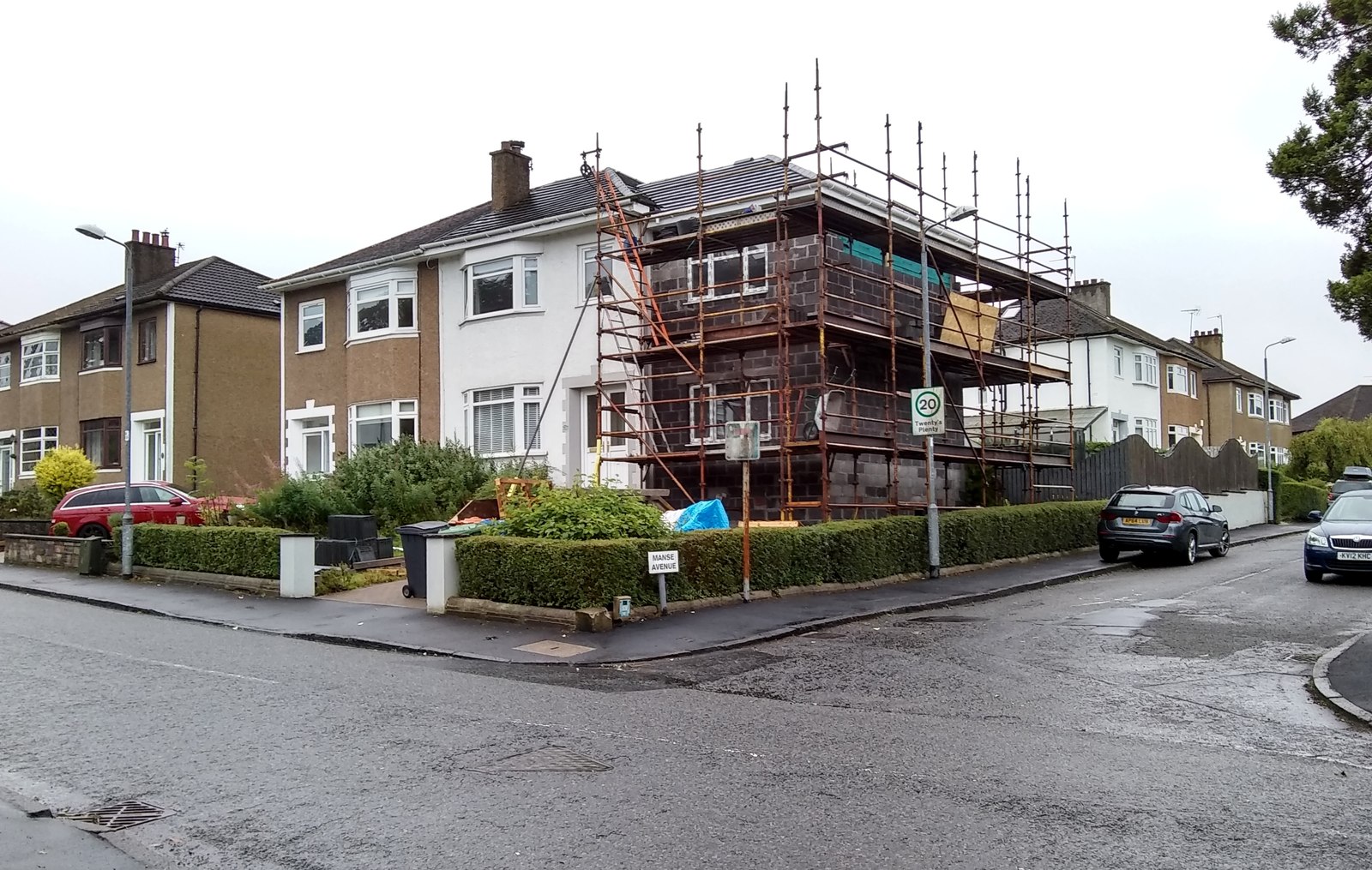
Published UK guides put a full single-storey extension at £1,800–£3,000 per m², a shell-only build at £1,200–£1,700, and London projects higher still. Per-m² quotes mislead because fixed costs do not shrink with the floor area. Here is what the bands cover, and how to read one.
What does a house extension cost per m²?
Every figure below is a published range, read on 25 October 2026; none is a quote.
| What the rate describes | Published per m² | Source |
|---|---|---|
| Single-storey, full build, UK average | £1,800–£3,000 (average £2,400) | Checkatrade, June 2026, ex VAT; FMB; HOA (July 2026) |
| Shell only: watertight, no plastering, glazing or services | £1,200–£1,700 | Checkatrade, June 2026, ex VAT |
| "Standard room extension", national average | £1,250–£2,500 | Move IQ, updated October 2025 |
| Straightforward single-storey, England outside London | £2,200–£2,800 | Hepburn Architects, July 2026 feasibility guide, ex VAT |
| Higher-specification single-storey, same source | £2,800–£3,500+ | Hepburn Architects |
| Complex build with major structural alterations | £3,000–£4,000+ | Hepburn Architects |
| London, single-storey | £2,300–£3,400 | HOA (July 2026); Architecture for London quotes £3,000–£5,000 |
| Two-storey | £1,000–£2,000 (FMB; its FAQ says up to £2,500); £1,850–£3,500 (Ideal Home, 2025, shell only); £2,070–£2,893 (NABC, October 2025, ex VAT) | FMB; Ideal Home; NABC |
Three cautions. First, the top two bands are not independent votes: HOA's table credits Checkatrade and FMB's single-storey band is identical, so read £1,800–£3,000 as one data point repeated. Second, the same numbers can carry different labels: Ideal Home lists single-storey at £1,800–£3,000/m² but says its figures cover "the shell only", the same band Checkatrade presents as a full build. Ask what any per-m² figure includes. Third, VAT: FMB says most extension work carries 20%, and Hepburn Architects warns "some contractors present net figures". Move IQ's lower band is its own national average; it too names London and the South East as the dear end.
Why per-m² prices mislead
Small extensions cost more per square metre, and the reason is structural. FMB's guide says surveys, scaffolding, foundations, drainage, fees and building control cost much the same whatever the floor area, so a small build spreads them over fewer metres. Hepburn Architects says the same of side returns, where the "modest area can be deceptive" because foundations, drainage, structure and roof glazing concentrate into a small footprint.
Fit-out distorts the rate too. Published bands mostly buy the building, not what goes in it: Checkatrade adds £15,000–£35,000 for a kitchen, £5,500–£9,000 for a bathroom; Ideal Home puts a kitchen at £10,000–£50,000+; Architecture for London says £15,000–£40,000. Location moves the rate as well: HOA puts London at £2,300–£3,400 per m² against the £1,800–£3,000 UK average; NABC found London about 9% dearer. Hepburn Architects puts it plainly: "A square-metre rate is not a substitute for a detailed tender."
One related question belongs here: the most expensive part of building an extension is usually the structure. NABC's 2025 London breakdown puts external walls at 15%, foundations 14.1%, roof 12.3% and steel 8.7%, about half the total; fit-out follows. Our house extension cost guide has the full section.
How much would a 30m2 extension cost?
At the published UK band, 30m² works out at £54,000–£90,000 before VAT, kitchen and fees (our arithmetic). Published answers for the same area differ, and the spread is the lesson. Checkatrade's own 30m² total is £60,000–£84,000 ex VAT. Hepburn Architects' worked example, a 30m² kitchen-led extension with substantial remodelling, is £84,000–£105,000+ construction-only, England outside London, ex VAT. Three answers for one floor area: specification and fixed costs, not size, set the rate.
On top of any band sit the parts it leaves out: 20% VAT on most build work (FMB), a kitchen add-on of £15,000–£35,000 (Checkatrade), fees and contingency. In our main guide's worked example, a 25m² kitchen-diner lands at roughly £78,000 to £170,000 all-in. Read it in our extension cost guide.
Is a 3m extension big enough?
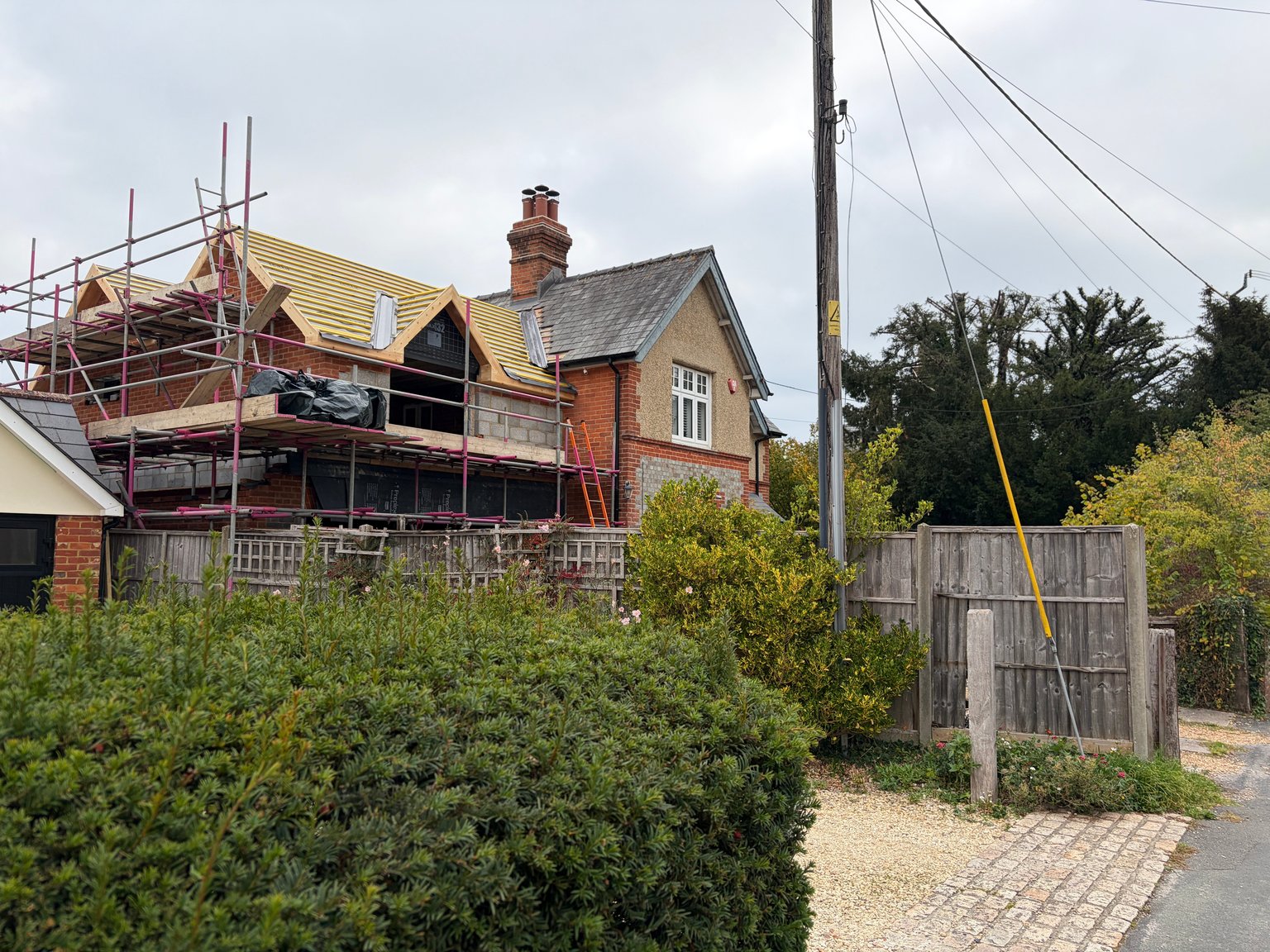
Measure depth times width. A 3m × 4m addition gives 12m²; 3m × 5m gives 15m² (our arithmetic). How much does a 3 metre extension cost in the UK? At the published band, 12m² is £21,600–£36,000 and 15m² £27,000–£45,000, ex VAT, build only (our arithmetic). One London builder's guide puts a basic single-storey 3m extension at £30,000–£50,000 and a double-storey at £50,000–£85,000; treat its figures as one firm's view. The uses it lists are the honest ones: an open-plan kitchen, a home office or an additional living space.
Is a 3 metre extension worth it? Only for some layouts. Three metres can turn a galley kitchen into a kitchen-diner with garden light; it will not hold a family room and its furniture. The fixed-cost penalty bites hardest here: FMB's surveys, scaffolding and drainage cost much the same at 12m² as at 30m². Whether it pays back is our main guide's question.
Is 30k enough for an extension?
Do the division. £30,000 buys 10–17m² of full build at the published band, before VAT, fees and fit-out (our arithmetic). At Checkatrade's shell-only rate it stretches to about 18–25m² of watertight structure you still have to finish. So £30,000 covers a small, simple room at the modest end, not a kitchen-diner once kitchen, VAT and fees land. Treat quotes claiming otherwise with care. Is 50k enough for an extension? It sits inside Checkatrade's 20m² range (£40,000–£56,000 ex VAT), though 20% VAT on the £48,000 midpoint takes it to £57,600: a plain room, not a kitchen-diner.
Can I build an extension for 20k?
Rarely, as a new room. £20,000 buys about 7–11m² at the published per-m² band, or 12–17m² of unfinished shell (our arithmetic from Checkatrade's rates). Where £20,000 does work is existing structure: Checkatrade gives £8,500–£20,000 for a 15m² garage conversion and £9,000–£18,000 for a conservatory. Full answers: our extension cost guide.
Is it worth getting an architect for an extension?
Start with the fee, because the published structures disagree. HOA's 2026 guide puts architects at 3–15% of construction cost; Ideal Home says usually 3–7%, up to 15%; Architecture for London's own guide puts all professional services at 15–20% on top of construction cost, one practice's view of a full design team. A London builder's 3m guide quotes £2,700–£5,000 for planning and design. On a small build a percentage fee can look steep, which is why some practices quote flat fees.
What the fee buys: Architecture for London says an architect creates the detailed plans builders need to quote accurately and can propose "alternative solutions that may be more economical"; reorganising existing space can be "cheaper and more beneficial than a poorly conceived house extension". Hepburn Architects warns that "the cheapest drawing package is not necessarily the cheapest route to a completed extension". Ideal Home suggests picking an architect who specialises in your kind of extension in your area, because they know the local rules. For a plain single-storey room many builders handle the design themselves; the fee earns its place where structure, remodelling or a difficult site is involved.
What is the cheapest way to build a single-storey extension?
Each saves money, and each carries a trade-off.
- Keep the form simple. Ideal Home names "concrete blockwork and timber frame" as cost-effective structural options. The trade-off: FMB member Tim Bromley, MD of Wolfe Design and Build, says timber frame "doesn't suit every project", while block and brick suit irregular period profiles better.
- Buy a shell. Checkatrade's shell-only band is £1,200–£1,700 per m²; Move IQ's is £750–£1,500. The trade-off: a shell is watertight structure only, with plastering, glazing and services still to pay for.
- Do part of the work yourself. Ideal Home's featured renovator saved £25,000 on her build by doing some of the work herself. The caveat is the one that matters: take on only what you are skilled at, because paying an expert to redo mistakes erases the saving.
- Consider not extending. Ideal Home points to an internal remodel, a garage conversion or a conservatory as lower-cost routes to more usable space; our main guide carries those figures.
- Do not buy the cheapest quote blindly. A rate far below every published band is one of the warning signs in our guide to builder red flags.
How to get a per-m² quote you can trust
Make quotes comparable, or the per-m² rate is noise. One practice's budget checklist runs to fifteen headings, from main building work, demolition and structural alterations to glazing, services, fit-out, fees, surveys, contingency and VAT (Hepburn Architects). Ask each contractor to price against the same list and to state what is excluded, as FMB advises: exclusions, assumptions and provisional sums in writing, VAT treatment stated.
Ask several firms to quote the same scope; how many quotes to get covers the like-for-like method. Read how to find a good builder and take the twelve questions to every meeting. Who builds it matters, because builders are not licensed: a 2025 HOA and FMB survey found 47% of UK adults believe they are. The Guild Standard screens on three public checks: a Google rating of at least 4.6 stars, at least 30 verified reviews, and at least three years of trading.
Next step
Browse vetted builders, then test their per-m² rates against the published bands above. For totals by type and size, read our house extension cost guide; for day rates, see how much a builder costs. More cost guides are coming in our guides section.